May 12, 2026
What I keep noticing in the current AI conversation is how quickly it becomes a labor conversation.
How many people can this replace? How lean can we get? How much faster can we move with fewer hands?
I understand why that is happening. Efficiency is tangible. Headcount is measurable. And AI absolutely can reduce effort in real ways.
But I think that is still the wrong starting point.
What AI changes first is not the need for capability. It changes where the work sits, how fast output can be produced, and what kinds of human judgment become more important once the tool is sitting in the middle of the workflow.
That is a different conversation.
I do not think the lesson from the current moment is that AI does not work. I think the lesson is that leaders are still too quick to move from “AI can help with this work” to “therefore the expertise behind this work is now less necessary.”
Those are not the same conclusion.
AI can absolutely compress effort in drafting, summarizing, coding, triage, classification, and analysis. But in regulated environments, and especially in member-facing ones, the burden does not disappear. It moves.
The institution still has to understand what was produced, decide whether it is sound, own the outcome, and explain it when something goes wrong.
That is where this starts to feel less like a productivity story and more like a governance story.
If a tool helps a lender assemble information faster, that is useful. If a tool helps a fraud team surface suspicious patterns faster, that is useful. If a tool helps a developer produce code faster, that is useful.
None of those examples automatically means the experienced lender, fraud analyst, or engineer has become less important.
In many cases, the opposite is true.
As output gets cheaper, judgment gets more valuable. As drafting gets easier, review gets harder. As code gets generated faster, the real question becomes whether the organization still has enough expertise close to the work to know what it actually shipped, approved, or communicated.
That is where a lot of the workforce conversation feels off to me. If leaders use AI as a headcount strategy before they redesign the work, strengthen review, and clarify accountability, they may save cost in one place while creating hidden fragility somewhere else.
The output may look more efficient right up until quality, resilience, or trust starts to break.
Credit unions should be especially careful here.
Our model is not built around producing the maximum amount of output at the lowest possible labor cost. It is built around making sound decisions, serving members well, and preserving trust in the moments that actually matter.
AI can absolutely help with that. But only if the organization is clear about which tasks are being accelerated, which decisions still require experienced human judgment, and who owns the result when the tool gets it wrong.
That last part matters more than I think many organizations want to admit.
The real question is not whether AI can help teams move faster. It clearly can.
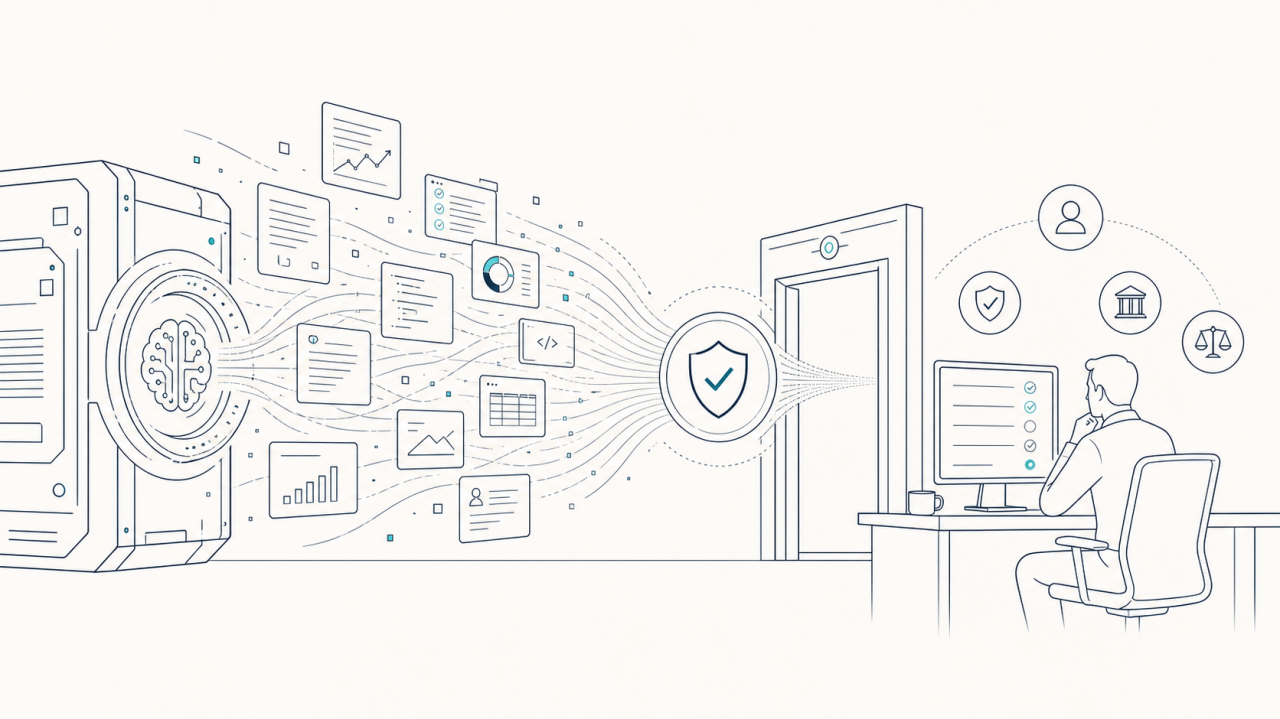
The question is what happens when generation outpaces understanding.
If building is no longer the bottleneck, the constraint moves to review, verification, testing, and whether the people closest to the output actually understand what was shipped well enough to stand behind it.
That is not just a software problem. It is a governance problem.
So before we talk about AI as a workforce strategy, I think the more useful question is simpler: which parts of the work are we actually redesigning, and where are we accidentally removing expertise from the very places where understanding still matters most?