February 15, 2026
Hopefully, most now have a working picture of “AI tools”—fraud models, chatbots, RPA, copilots. In my earlier AI primer, I grouped AI agents alongside other AI flavors; that was useful for orientation, but it did not give agents and agentic AI the space they deserve.
From AI tools to AI agents
Most AI in credit unions today is still “tool‑shaped”: it responds when we ask it to.
- A credit risk model scores an application when it is called.
- A generative AI assistant drafts an email when a user prompts it.
- An RPA bot moves data when a job is scheduled.
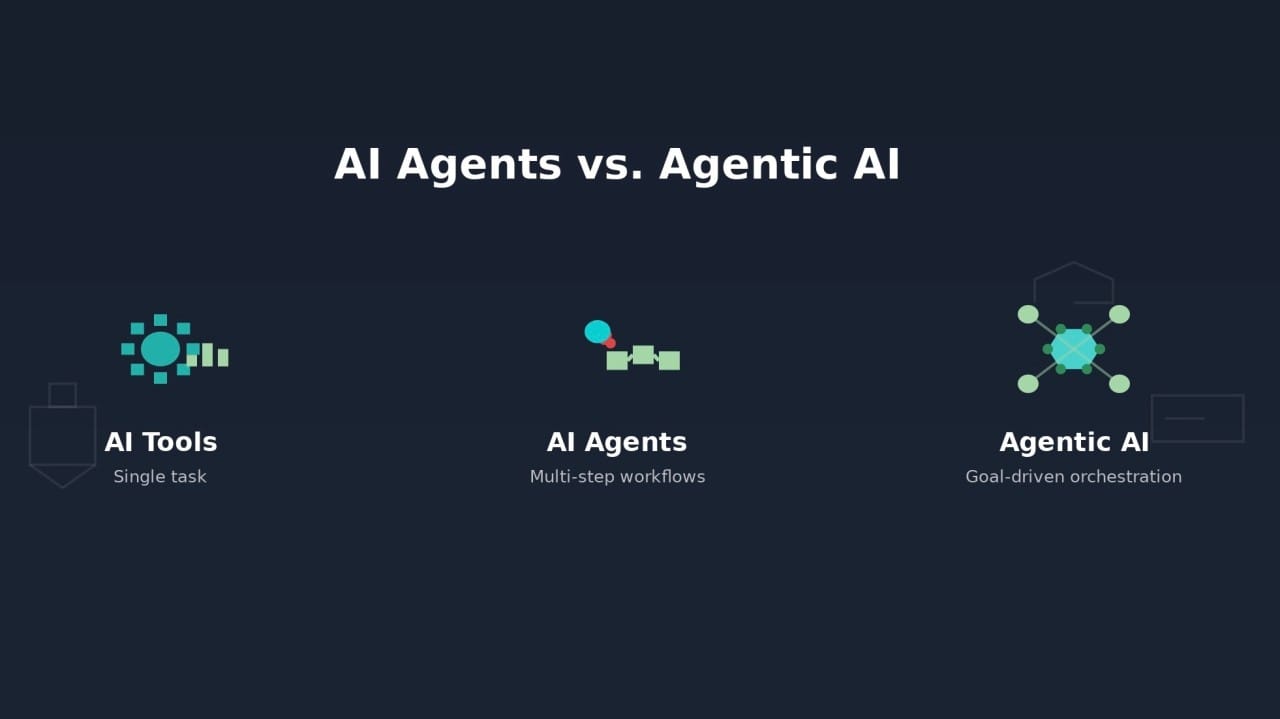
These tools are powerful, but they are reactive and narrow. They handle one step when triggered.
AI agents go a step further: they can run a sequence of tasks toward a goal, choosing the next action from a playbook you define. For example, an AI lending assistant could pull application data from the LOS, call a credit model, check policy rules, update status fields, and draft conditions and a member message for staff review. Once a person or system starts the process, it moves through several actions on its own, within clear boundaries.
AI‑powered chatbots and voice agents are a visible example. A simple Q&A chatbot that only answers questions is conversational AI, not an agent. But a member‑service bot that can also change an address, set up travel notices, open a dispute, and update tickets in downstream systems—without staff touching each step—is functioning as an AI agent.
A simple analogy: traditional AI is a navigation app that tells you where to turn; an AI agent is cruise control that manages speed and lane on a defined stretch of road. You are still steering, and you decide when it turns on and off.
What makes agentic AI different
Agentic AI is not “just another AI agent.” It is a broader system that combines agents, tools, and models into something that can act with real autonomy inside guardrails. In plain language:
- AI agents: Software that can execute multi‑step tasks using AI, usually within a narrow scope, and usually triggered by a human or simple event.
- Agentic AI: Systems designed with agency—they can interpret higher‑level goals, plan, act, and adjust across multiple steps and tools, with less step‑by‑step human prompting.
Three distinctions are useful when you are evaluating proposals or vendor claims:
- Trigger: AI agents typically start when a person or system tells them to; agentic AI can decide when to act based on goals and changing conditions.
- Autonomy: AI agents follow a defined path with modest flexibility; agentic AI has more freedom to choose paths, switch tools, and adapt as it goes.
- Scope: AI agents usually live in one workflow (for example, disputes or member service); agentic AI can coordinate across workflows and systems (for example, fraud, servicing, and compliance together).
For the next 2–5 years in credit unions, a practical mental model is: AI agents as smarter workflow automation in specific areas; agentic AI as an emerging “digital workforce layer” that will show up first in tightly scoped pilots, not in fully autonomous decisioning.
Where this shows up in credit unions
Three concrete examples help separate the two.
Lending
- Problem: Slow, manual steps between application, verification, and member communication.
- AI agent: Orchestrates the checklist—calls the scorecard, verifies documents, updates status fields, and drafts standard messages for human review.
- Agentic AI: Monitors the lending pipeline, identifies bottlenecks, reprioritizes queues, and suggests policy tweaks, while automatically launching targeted outreach to members stuck at key stages—within limits you set.
Fraud and disputes
- Problem: Fragmented monitoring and slow dispute handling.
- AI agent: For a given alert, gathers transactions, checks prior cases, drafts a case summary, and prepares member notifications for an analyst to approve.
- Agentic AI: Watches patterns across accounts, adjusts thresholds, spins up additional checks, and routes work between fraud, contact center, and operations teams, escalating only when confidence or impact crosses a defined line.
Member onboarding and account changes
- Problem: New accounts and complex changes involve multiple handoffs and delays.
- AI agent (often via chatbot or voice agent): Guides a single onboarding or service journey—verifies ID, runs watchlist checks, updates contact details, sets up alerts, and pushes data into the core and CRM.
- Agentic AI: Monitors new members for early friction, triggers proactive outreach if usage looks off, and suggests next‑best actions to staff while coordinating small fixes across channels.
Across these examples, humans still own judgment calls, exceptions, and anything with significant member harm or regulatory impact. The technology moves work, not accountability.
Governance questions to keep it grounded
Because agentic AI introduces more autonomy, the governance lens naturally shifts from “Is this model accurate?” to “What can this system reach, and how far can it go before a human must step in?” Practical questions for executive and board discussions include:
- Scope: Where are simple AI agents—like service chatbots that can complete routine actions—acceptable in well‑defined workflows, and where would agentic AI be inappropriate today (for example, final loan denials or high‑dollar fraud blocks)?
- Autonomy: For each agent or agentic system, what can it do on its own, what can it only recommend, and what must always be a human decision?
- Auditability: Can risk, compliance, and internal audit clearly see what the system did, in what order, and why—enough to explain it to members and regulators?
- Member trust and fairness: Are the data and rules driving these systems robust enough that they do not systematically disadvantage certain member groups, especially in lending and fraud?
These distinctions are less about chasing the latest label and more about giving leadership teams a shared way to read roadmaps, evaluate vendor claims, and decide where AI agents and agentic AI can genuinely strengthen member experience, resilience, and trust.