March 6, 2026
Here’s the thing about security and resilience: when they’re working well, nobody notices. Members transact, staff serve, and the organization grows. It’s only when something goes wrong that everyone realizes how much was depending on it.
That’s not a criticism of how organizations prioritize this. It’s just the nature of infrastructure. And it creates a genuine leadership challenge: how do you make the case for consistent, forward-looking investment in something that, if it’s working, produces no visible outcome?
The framing that’s resonated most with me is shifting the conversation from cybersecurity to digital trust. Members don’t think about firewalls or authentication protocols. They think: is my money safe? Will my credit union be there when I need them? If something goes wrong, will it get fixed quickly?
Those are trust questions. And trust, once lost, is slow to rebuild.
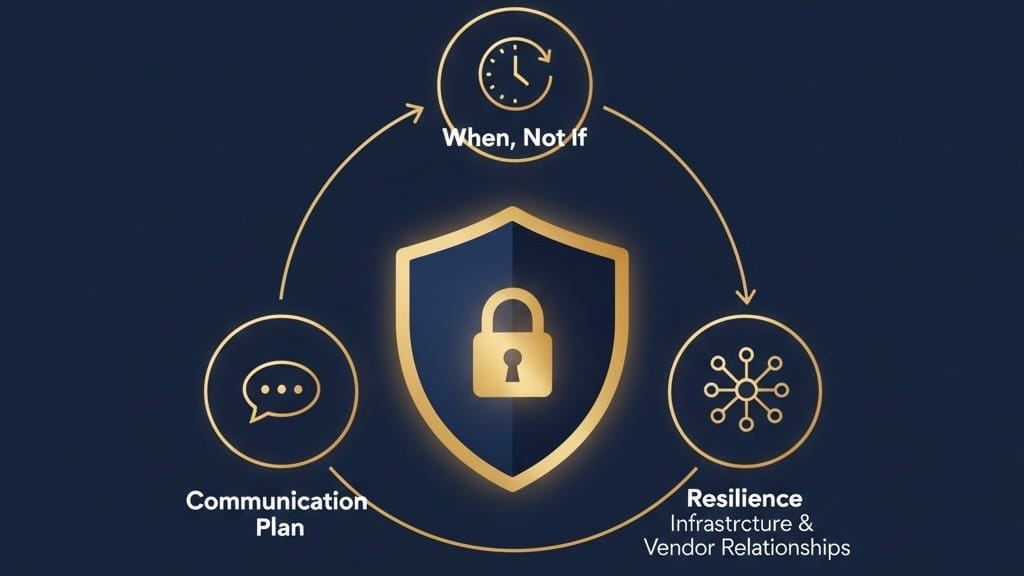
One mindset shift that matters here: the question isn’t if a security incident will happen. It’s when. That’s not pessimism. It’s the reality of operating in a threat environment that is constantly evolving. Organizations that plan from that assumption tend to be significantly better prepared than those still treating a breach as a remote possibility. It changes what you invest in, how you staff, and how you respond when something does happen.
A few things that tend to support a strong digital trust posture:
Treating resilience as a business conversation, not a technical one. Uptime, incident response, and vendor reliability belong on leadership agendas, not just IT reviews. If the board isn’t regularly discussing this, it’s worth asking why not.
Designing security with the member and employee experience in mind. Controls that create unnecessary friction get worked around. The best ones are almost invisible, strong enough to protect and light enough that people don’t look for ways around them.
Carrying that lens into vendor relationships. Security posture and incident history deserve real weight in partner evaluations, not just a checkbox in procurement. Your vendors’ vulnerabilities can become your incidents.
And then there’s communication, which I’d argue is the most underinvested part of most incident response plans.
When something happens, the technical response matters enormously. But the member communication response matters just as much. Members are generally willing to maintain trust in an organization that communicates clearly and quickly. What erodes trust isn’t usually the incident itself. It’s silence, vague language, or the sense that the organization is more focused on protecting itself than keeping members informed.
Here’s the nuance though: most organizations carry cyber insurance, and those policies almost always come with legal restrictions on what can be said publicly and when. That’s a real constraint, and it’s not one you want to be figuring out mid-incident. The communication plan needs to be developed in advance, in coordination with legal counsel and your insurance carrier, so that when something happens you already have approved language, clear escalation paths, and a framework for what you can say at each stage of the response.
Done well, that pre-coordination doesn’t limit communication. It actually enables it. Members hear from you faster, with clearer information, and with less of the hesitation that makes organizations sound like they’re hiding something. The goal is updates that keep members informed and reduce anxiety, even when the full picture isn’t available yet.
As digital channels expand and member populations grow, the surface area grows too. That’s a reason to be thoughtful and prepared, not anxious. The credit unions that treat digital trust as a long-term investment and plan seriously for when things go wrong tend to come out of incidents with their member relationships intact. Sometimes even stronger.
How does your organization think about the communication side of incident response? Is it as developed and pre-coordinated as the technical side?