
March 20, 2026
I will admit it: I am a true techno-geek at heart.
Growing up, I was fascinated by technology. My earliest experiences were with old card punch machines and acoustic coupler modems—the kind you might remember from the 1980 movie WarGames. Over a diverse career that has spanned early systems integration to now leading data and AI efforts, I have seen a lot of technological change. But the current pace of advancement is different. It is faster, broader, and harder to keep up with using yesterday’s methods.
That is one reason I have come to value Generative AI tools in my own work.
I wanted to share this because I think it is important that leaders show, not just tell, how these tools can help us deliver on our vision and goals more effectively. Used well, they can help us scale our ability to research, synthesize, refine, and communicate ideas without losing the core perspective behind them.
For me, one of the biggest realities is simple: manual research no longer scales.
There is just too much happening across data, AI, governance, risk, and innovation to rely only on manually combing through professional journals, articles, and scattered sources one by one. That approach still has value, but it is no longer enough by itself. Tools like Perplexity help me search broadly, curate relevant information, and pull together concise research summaries so I can digest new developments more rapidly and spend more time thinking about what they actually mean.
And that is the key for me—thinking, not just collecting. That has long been the holy grail with Data and AI initiatives, how can we spend less time curating and transforming data in spreadsheets and multiple systems and actually spend our time deciding based on robust trusted insights.
Most of the time, I am not looking for AI to create an idea for me. I am using it to help sharpen ideas I am already working through, or topics I keep hearing about that spark thought, innovation, or healthy tension. It helps me connect signals, surface supporting resources, and build a more synchronized portfolio of content that stays aligned to a broader direction and vision.
But let me be equally clear: this is not an easy button.
There is a misconception that you can type in a prompt, get back something polished, and call it done. Anyone who has seriously tried to build a credible professional portfolio of articles knows that is not how it works. Done right, it takes a lot of effort. It takes iteration, refinement, and more patience than most people realize.
And in my view, it works best when subject matter expertise is in the room.
That is because AI can produce responses that look polished, sound confident, and read beautifully—while still being wrong, incomplete, or just slightly off in ways that matter. Subject matter experts can usually spot when the AI starts to drift, when it is oversimplifying something important, or when it is delivering polished language that misses the real point. I find myself redirecting it, challenging it, and sometimes outright arguing with it until the content gets back on track.
That tension is actually part of the process.
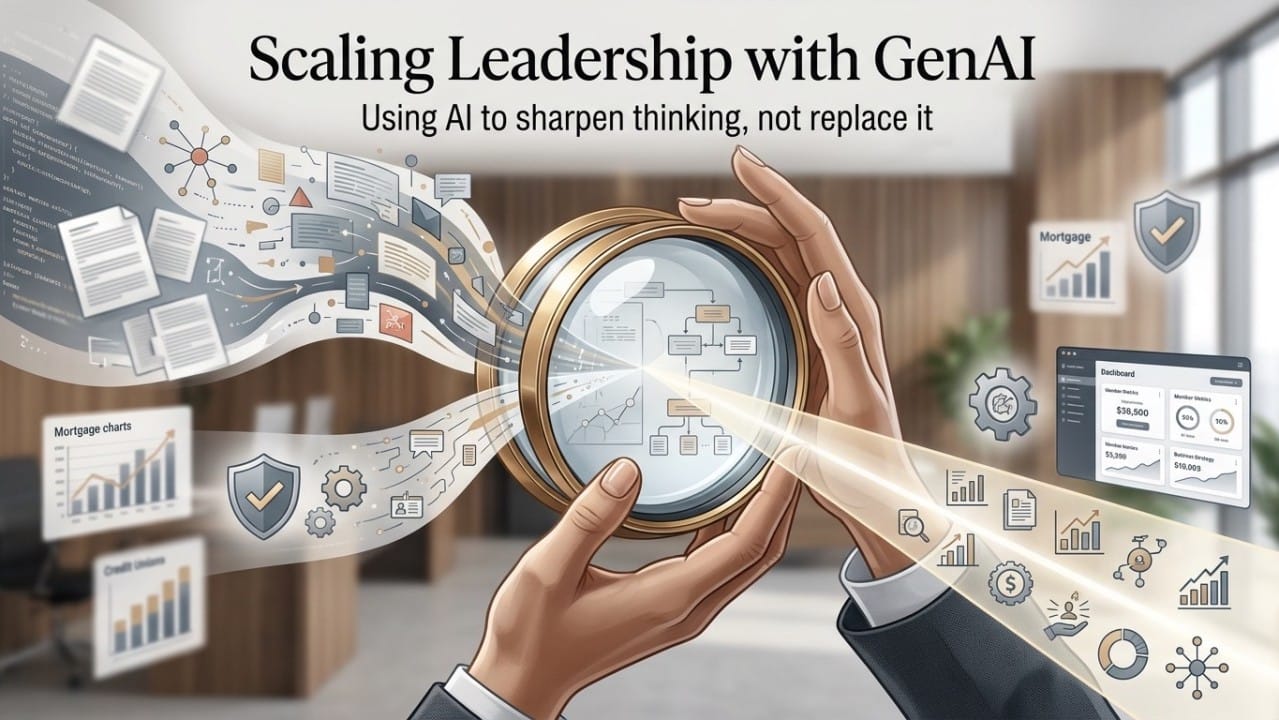
What comes out first is rarely what should be published. I continue fine tuning until the article sounds like me, reflects the intended message, and feels like something I am proud to put forward. Then I carry that same discipline into the visual side—using tools like NotebookLM to help generate cover image direction and then bringing things back for final alignment so the visuals support the message rather than distract from it. This part is still a work in progress as I get more proficient with the tools and creative side.
What I appreciate most is that these tools help me translate.
As someone who has spent a career around technology, data, information, and integration, I naturally think in ways that can lean technical. AI helps me turn some of that techno-speak into something more relatable and useful for a broader audience of technical and non-technical leaders alike. In a world increasingly shaped by data and AI, I think that translation matters just as much as the technology itself.
At their best, these tools do not replace expertise, judgment, or vision. They amplify them.
They help me keep pace with accelerating change, scale the work of turning ideas into something coherent, and stay engaged with a rapidly evolving landscape without losing the human responsibility to think critically. That has been the real journey for me—not just learning how to use the tools, but learning how to use them well enough to create something genuinely beneficial.
How are you using GenAI tools to keep up with the pace of change while still protecting the quality of your thinking?